SAVING GRACES: Big Picture/ Small Habits
Snoozehacking is about small steps.
It’s about making progress with quick, intentional habits - especially on days when motivation is low and life feels cluttered. It’s a reminder that meaningful change doesn’t require a dramatic reset. It just requires a step in the right direction.
But… what is the right direction anyway?
Well, since those daily habits are the smallest, most zoomed-in parts of my process in goal-setting…
This Juxtapost article is the equally important zoom-out.
Because while small steps can absolutely carry you forward, they work best when they’re connected to a bigger picture - when you’ve taken time to ask where you’re actually trying to go.
Zooming Out: Why Big-Picture Thinking Matters
One of the quiet dangers of habit culture is that it can turn into motion without meaning.
You can wake up early.
You can check boxes.
You can maintain impressive streaks.
And still feel oddly untethered.
Big-picture goal setting isn’t about rigid plans or aggressive optimization. For me, it’s about orientation - stepping back far enough to make sure my daily effort is aligned with the kind of life I want to be living over months and years, not just tomorrow morning.
That process starts at the highest level with something intentionally loose and flexible: a vision board.
High-Level: Vision Board
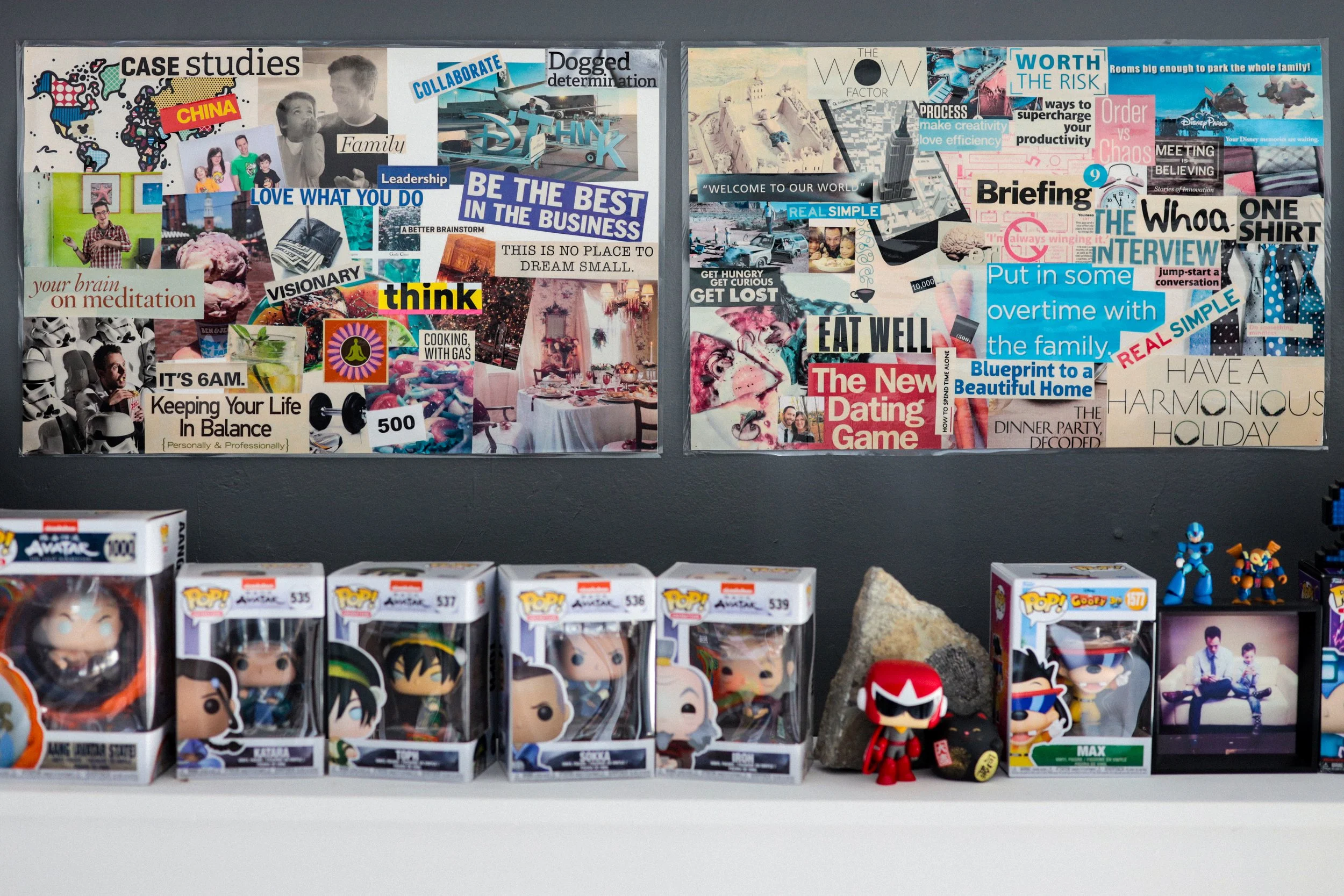
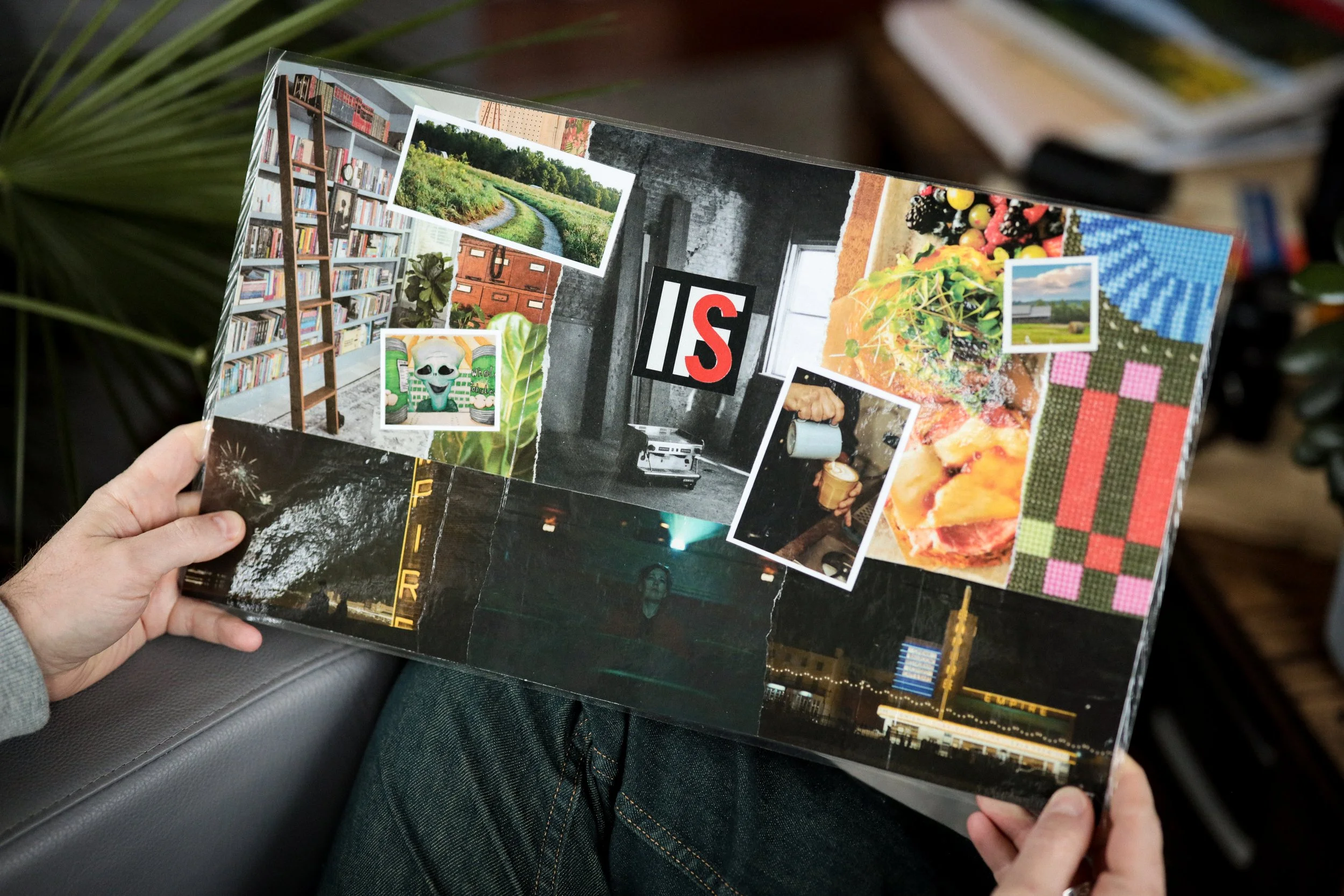
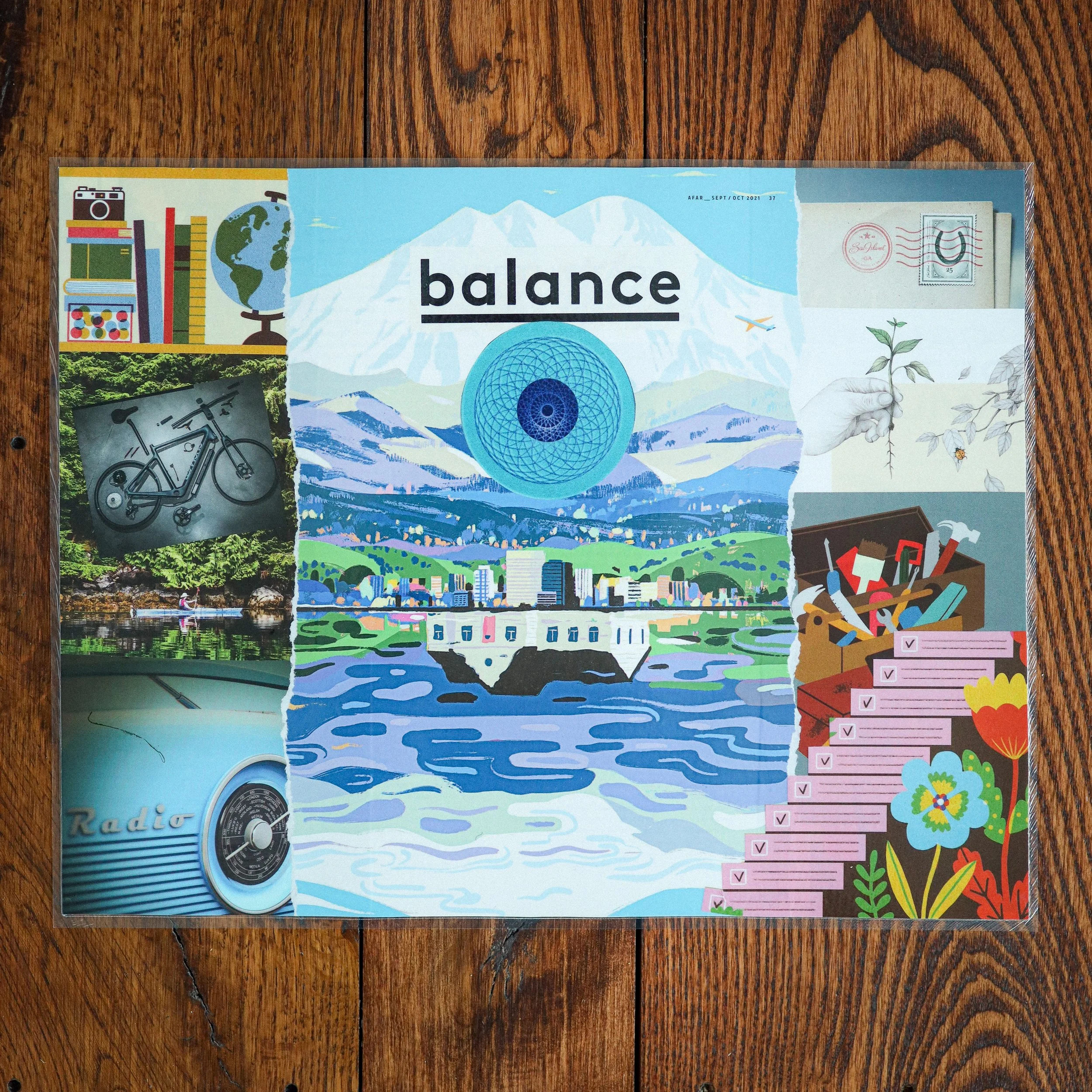
My 2015 (left) and 2016 (right) Vision Boards hang in my office along with every Vision Board since. They serve as reminders for how my perspective on goal-setting has changed over the years.
For me, a vision board is a physical exercise and an annual ritual. Our team at 12 Stars Media has done this together every year since 2014: we gather a stack of old magazines, flip through the pages, and tear out anything that catches our eye - words, images, numbers, abstract shapes. There’s no filtering in the moment. If it resonates, it comes out and goes in the pile.
Once the pile feels big enough, we step back and look for meaning. Themes emerge. Some clippings clearly connect to goals we already have in mind; others surface things we didn’t know how to name yet. Everything gets assembled onto a single posterboard - not as a plan, but as a visual snapshot of what we want the year to point toward.
Early on, my vision boards were very full, even chaotic, and contained a lot of words and images.
And, most everything meant something pretty specific to me.
One year, I put a single number on mine: 500.
The goal was to run 500 miles that year. It was specific, measurable, and easy to track. Either I did it or I didn’t (I did, by the way, thanks to a LOT of encouragement from my amazing wife).
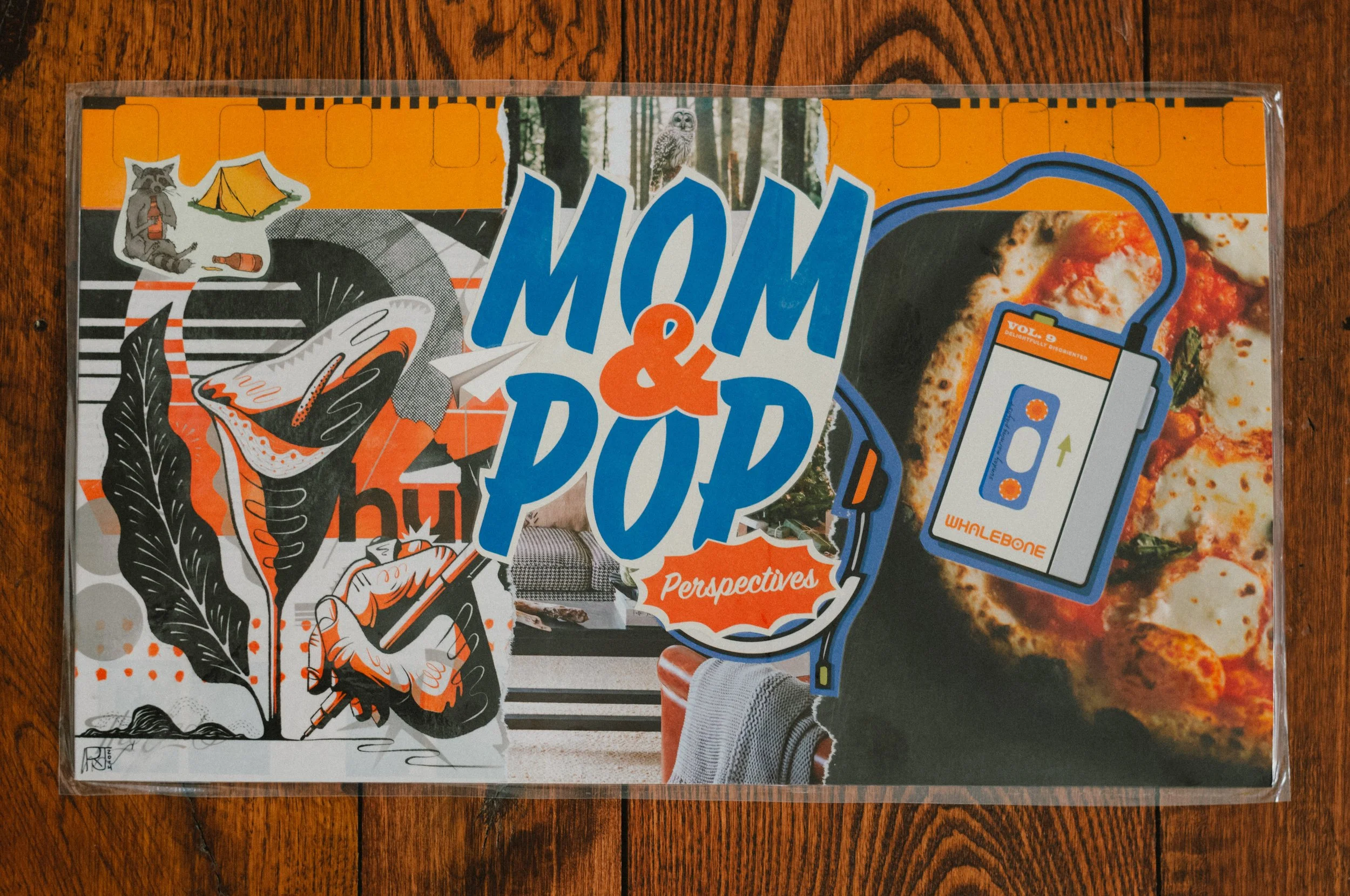
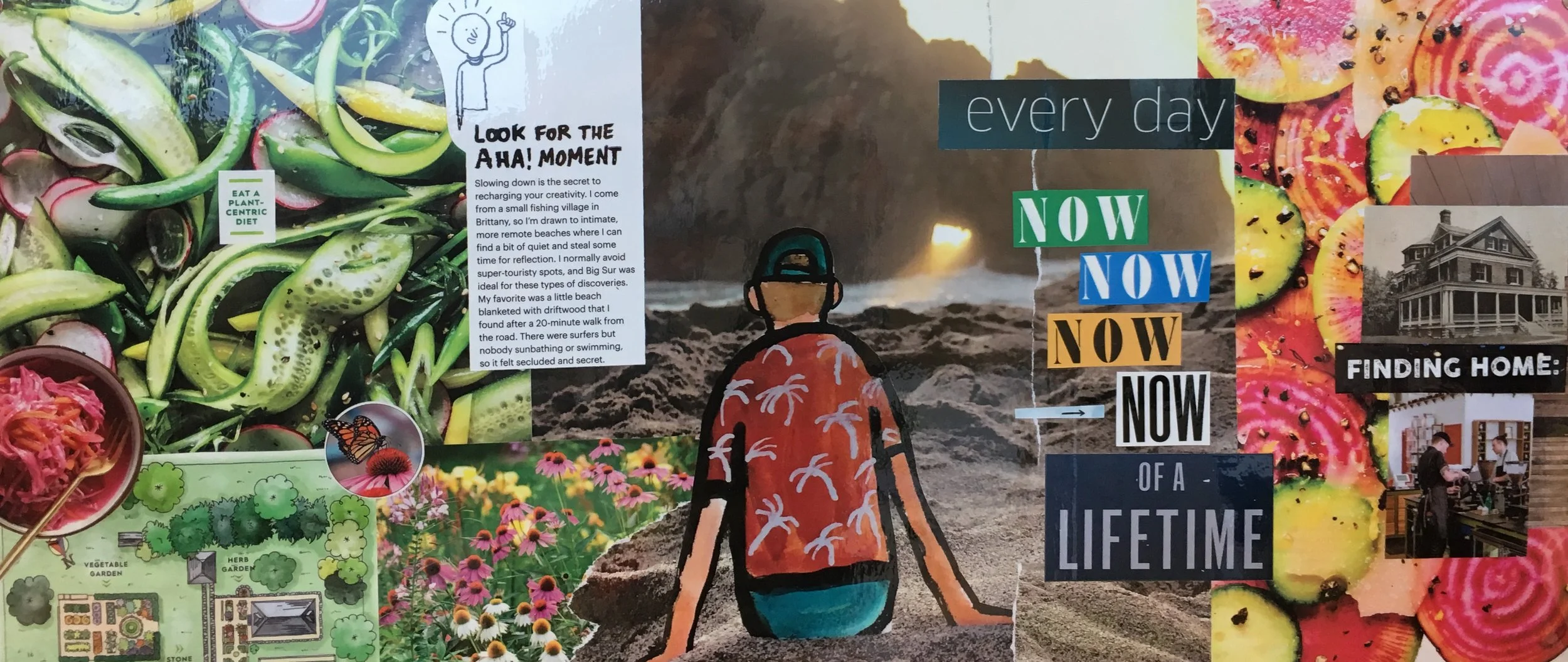
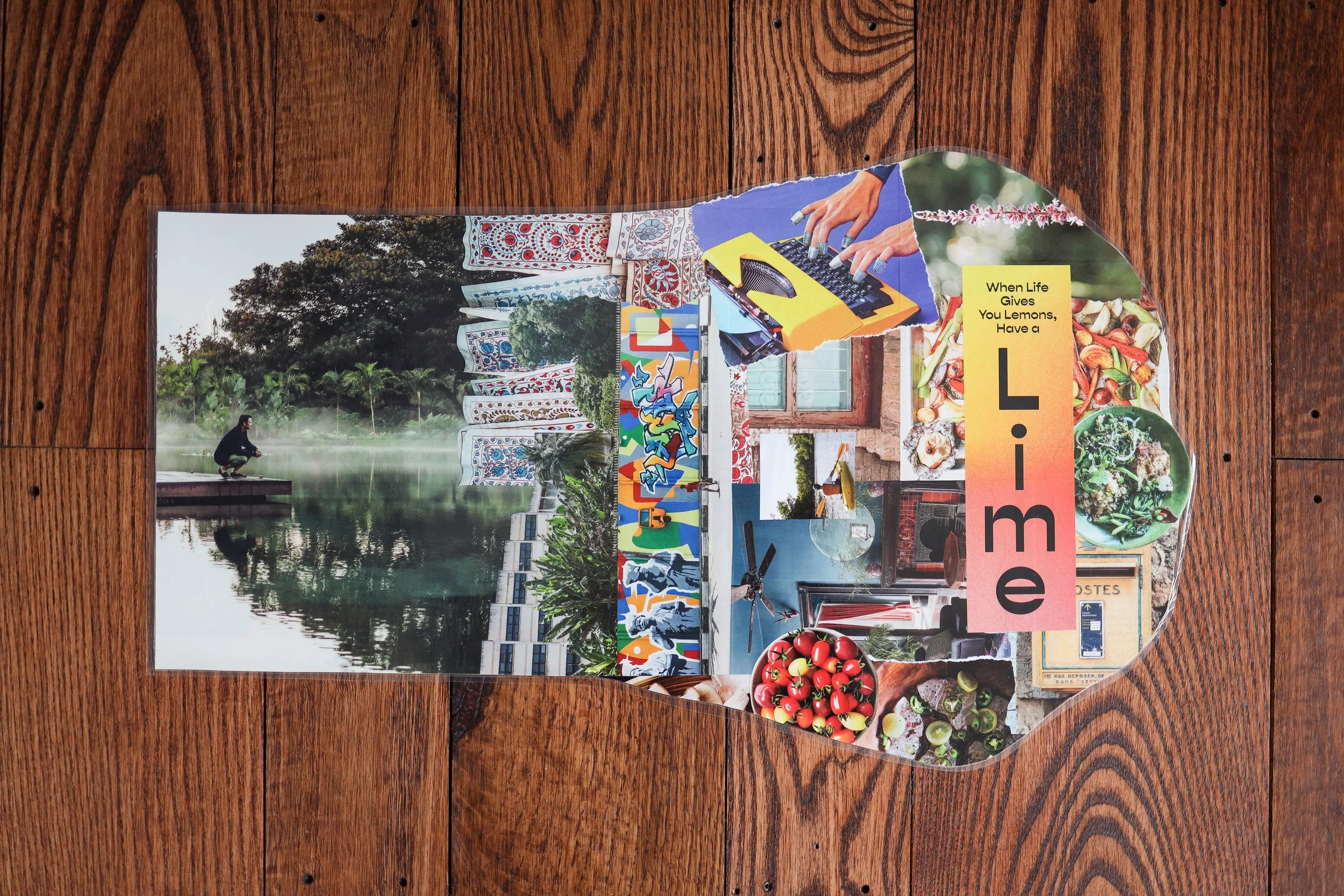
But over time, my vision boards shifted. Little by little, they became less about specific outcomes and more about themes - balance, perspective, creativity. Things that weren’t easily measurable, but that radically affected how a year felt while I was living it. They contained fewer words and even fewer images. They even became more like carefully arranged art pieces than chaotic collages.
The vision board stopped being a laundry list of everything I thought I might want to do in a year and started becoming a compass for how I wanted to feel in a year.
Still useful. Just different.

Mid-Level: My Life Rating and Goal Sheet
I suspect the shift in the style and purpose of my vision board was guided by a principle I knew, but hadn’t quite articulated yet - a single board can’t reflect your entire life.
So the next level of goal-setting for me is a deeper dive into life from multiple perspectives:
Family and Friends
Personal Development
Professional Development
Spirituality
Finances
Marriage
Fun & Recreation
Giving
Physical Environment
Fitness
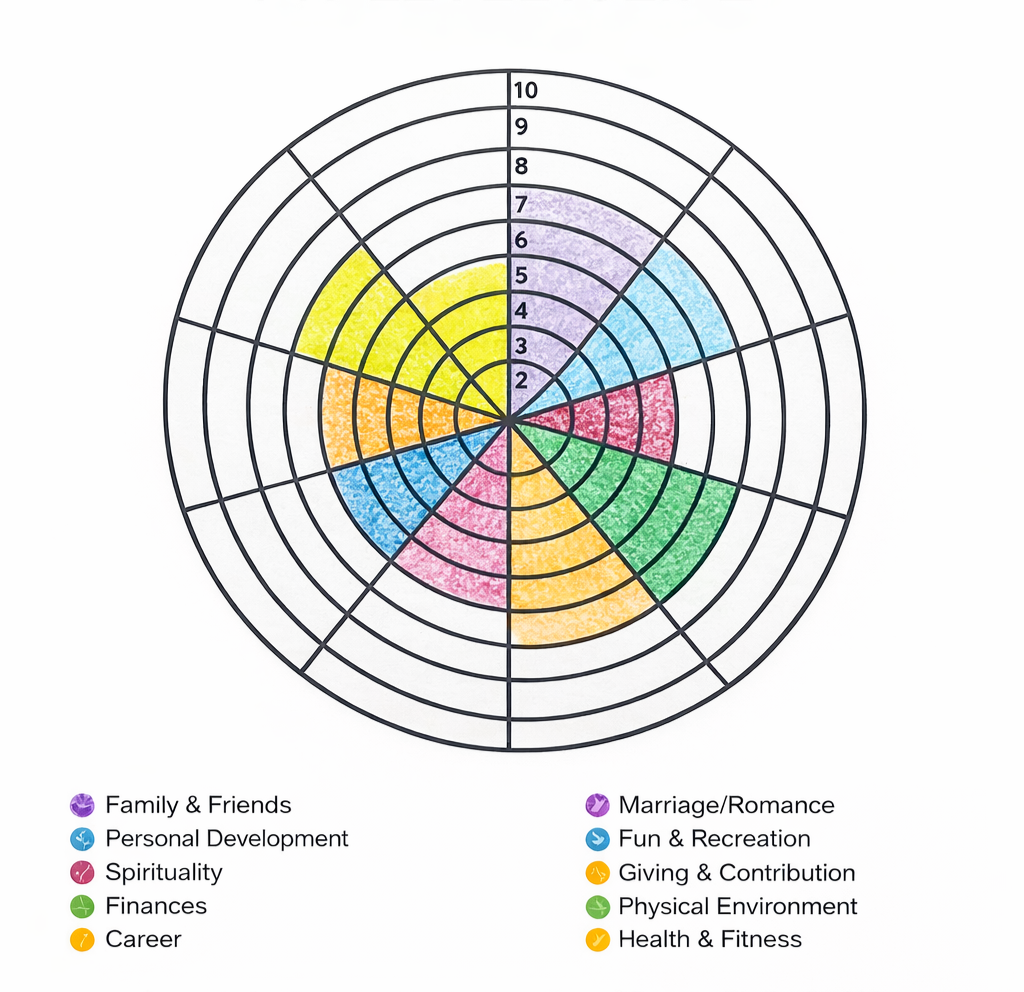
Everyone’s list can look a little different, by the way. The important thing is that you define specific categories so you think holistically about your life. For the next steps, I modified a technique from the book, My Miracle Morning, by Hal Elrod. There are a TON of examples of this process if you search “Level 10 Life” online, by the way. I keep my process pretty simple, using a printable worksheet and colored pencils.
For each area, I ask one simple question:
On a scale of 1–10, how would I rate this area of my life right now?
Just a gut reaction.
If something lands at a 5, the follow-up question is where the work begins:
What would make this a 6 or 7 by this time next year?
Not a full reinvention. Just a one- or two-notch improvement.
Some answers turn into big, one-time goals - like planning a meaningful family trip that might take a year of preparation but only needs to happen once.
Others turn into habits - activity that’s only effective if it’s repeated weekly or even daily.
Whether they’re big or small, every goal gets listed under each category and the whole thing gets saved as a single living document.
Three to five goals per category is plenty.
Some areas might only need one thing to maintain a 9 or 10.
Others might have more room for growth.
A key, though, is that this document lives in the cloud.
Not because pen and paper aren’t valuable (I still carry a notebook and write out most of my daily and weekly goals, meeting notes, etc.), but because this is something I want access to anytime. On a plane. In a waiting room. During an unexpected quiet moment.
I’ll pull it up periodically - not to judge progress, but to reorient.
Is this still where I want my energy going?
Because some goals or even the gauge I’d use to rate an area of my life change over time. So, it’s good practice to adjust accordingly.
Some things, however, are so beneficial and funnel up to all my other goals so well that they’ve become essential daily habits.
And that’s where Snoozehacking comes back into the picture.
Base-Level: Where Snoozehacking Fits
Snoozehacking lives at the daily habit level.
It’s not designed to accomplish specific goals on that longer list.
It’s designed to quietly support all of them.
Most of the things that truly improve our lives - mental clarity, physical health, emotional steadiness, perspective - don’t happen in dramatic moments. They happen through repetition.
That’s why my Snoozehacking routines are built around a structure I can remember even when my brain is foggy:
SAVING GRACES
SAVING GRACES: Morning & Evening Routines
Together, my morning and evening routines spell out SAVING GRACES.
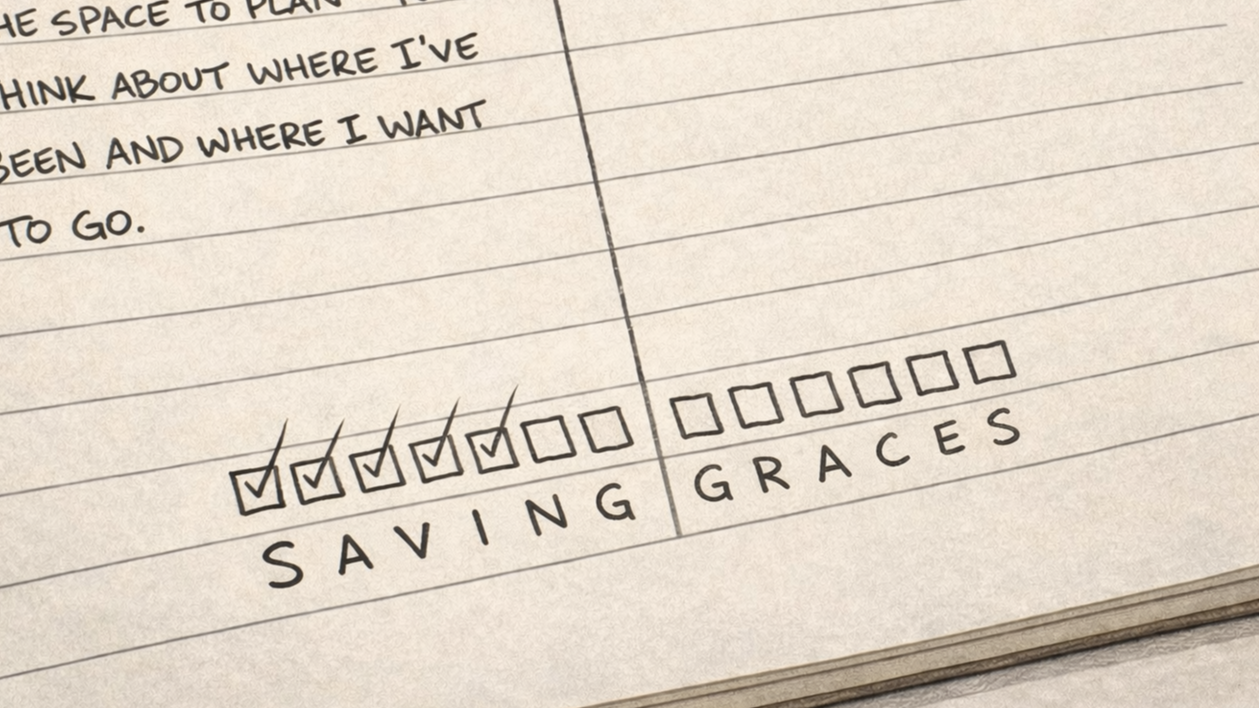
Every weekday gets its own page in my notebook and the SAVING GRACES checklist goes at the bottom of every one.
Six short practices in the morning.
Six in the evening.
On a perfect day, it adds up to about an hour in the morning and another hour in the evening.
On imperfect days, it’s less.
A simple, memorable structure matters more than consistency.
If I fall off for weeks or even months - I don’t “restart.”
I just jump back in like I never missed a beat.
Morning Routine — SAVING
Silence – Starting the day with a few minutes of nothing at all. Meditation or prayer could fill a similar role, but for me it’s enough to just be still and present with no other intention whatsoever.
Activity – These few minutes during my morning routine are for stretching and simple bodyweight exercises. It’s not for burning calories or building muscle. It’s just enough to wake up my body and build some physical momentum for the day.
Visualization – Some folks really get into visualization, a process of picturing in your mind the things that you want to become reality in your life. Personally, I take an extra step toward practicality here (no offense at all to visualization purists) and I get out my pencil and notebook to plan my day. I set my MITs (Most Important Tasks) for the day, and save room on the page for a few other parts of my SAVING GRACES practice.
Inspiration – Usually in the form of reading nonfiction, but sometimes I pull up articles or posts I’ve saved online, or even just browse through my own photos. This time is for priming the pump of creative thinking for the day. It’s not about completing anything or even working toward a specific reading goal. Just nine minutes of something to get the creative juices flowing.
Notes – Every year I find myself setting goals to write notes of encouragement to others. These fit right underneath categories like Family and Friends, Marriage, and Spirituality on my Life Rating and Goal Sheet. So, each morning I take a few minutes to write and send one of these notes. Sometimes it’s a text that I send right away. Sometimes it’s a sentence on a Post-it that I set out for my wife to see. They are all ephemeral and that’s the point. As often as not, though, I can’t think of a note to write to someone else, and I don’t want the habit to become robotic, so I allow myself the freedom to just jot down a note to myself, usually stemming from my Inspiration or Visualization from that morning.
Gratitude – I can’t overstate the importance of maintaining a grateful attitude in my life. Nothing affects my mental health more negatively than complaining and slipping into a victim mindset. So, even when things might not be going as planned (I’m not proposing you gaslight yourself when life really isn’t butterflies and rainbows), I take a few minutes to write a sentence or two of gratitude. I write this on the bottom quarter of the same notebook page I use for planning my day. On the left side I write my morning gratitude and, spoiler alert, the right side is for gratitude in the evening.
Evening Routine — GRACES
Gratitude – Like I said, I can’t overstate the importance. So, the evening routine gets a few minutes of gratitude as well. I start out the evening routine with this step, though, so I can reflect on my day by looking back at my notebook page and being grateful for what I accomplished or, sometimes, for whatever surprises life brought my way that kept me from accomplishing the vision I may have set out with in the morning.
Read – Although I often read in the morning during my inspiration time, it’s always non-fiction. The evening routine, then, is my fiction time and it’s one of the sessions that tends to extend past the nine-minute snooze interval more often than not.
Activity – Just like in the morning, I like to end the day with a short session of stretching or simple body weight exercises when I can convince my brain I still have the energy. This one is probably the hardest for me as I’ve gotten older.
Clean – This one is unique to the evening routine. I pick one thing around the house to tidy up. The trick to this, as I discovered pretty early on, is to have a list of areas that need addressed before starting the evening routine. If I have to come up with something on the spot, I spend half the time just trying to decide what to clean. So, I decide ahead of time by keeping a short list in my notebook or even just picking the area sometime during the day when I notice an area that needs attention.
Expression – The other one that’s unique to my evening routine, expression is all about artwork for me. I sketch, or type patterns on my typewriter, or cut out images that might later go into a collage. Expressing myself through art is a huge part of nurturing my creativity and my mental health. If traditional art isn’t your thing, you could replace this with a different form of self-expression or a hobby you enjoy.
Silence – Ending the day the same way it began. Simple silence.
Starting and ending each day with silence and gratitude has a compounding effect on mental health.
Daily stretching supports a strong foundation for physical wellbeing.
Freestyle expression keeps creativity fresh.
No single habit completes a goal.
But together, they funnel up to my life rating goals and even my vision board, supporting nearly every area of life I’m trying to improve - one or two notches at a time.
That’s it!
Between my last post about Snoozehacking and this one about my goal-setting process, I think I’ve covered a massive portion of the practices that have helped me maintain healthy direction and momentum for my life.
None of this is about doing everything at once, or doing it perfectly. It’s about getting a clearer idea of where you want to go, breaking that direction down into manageable pieces, and then supporting those pieces with small, repeatable habits that fit into real life.
You don’t need to adopt every piece of my process. In fact, I’d argue you shouldn’t. The value isn’t in copying someone else’s system - it’s in noticing how you can find your own small habits, clear direction, and regular reflection that can work together to support a life that feels intentional.
Next Steps:
🧠 Think about it - How do you plan your goals? Is there a part of my process that could help you get more clarity around how to achieve your own goals?
💬 Talk about it - Did you try something new this year with your goal planning? Let me know! Leave a comment here or reply to one of my emails. I’d love to know how it goes for you!
👉 Want more weekly reflections like this? Sign up for the email list to get each new Juxtapost in your inbox.