Snoozehacking: Delay / Direction
Most of us drastically overestimate how much time and effort it takes to make positive steps toward meaningful habits and, ultimately, a better life.
We think, “I don’t have enough energy left to read in the evening,” or “I can’t squeeze any exercise in before work.” We think meditation requires a cushion, a playlist, and a sense of calm we never have.
And because we imagine these things take so much time and effort, we delay them. We wait for the perfect conditions. We promise ourselves “after this week, things will slow down.”
But here’s the truth:
Most meaningful habits take far less time than we think.
And they can begin with a tool you probably already use every day. You just have to flip it around and use it the other way.
It’s ironic, really. The very first thing many of us do every morning is reinforce the exact myth that keeps us stuck.
We hit snooze. 💤
But the snooze button doesn’t have to be the accomplice to your morning procrastination ritual.
You can hack it and turn it into a built-in system for doing what you care about - in small, doable intervals your brain and body will not only accept, but benefit from far more than those absolute, cold-turkey commitments we almost never follow through on.
A Quick Sidebar: Why Nine Minutes?
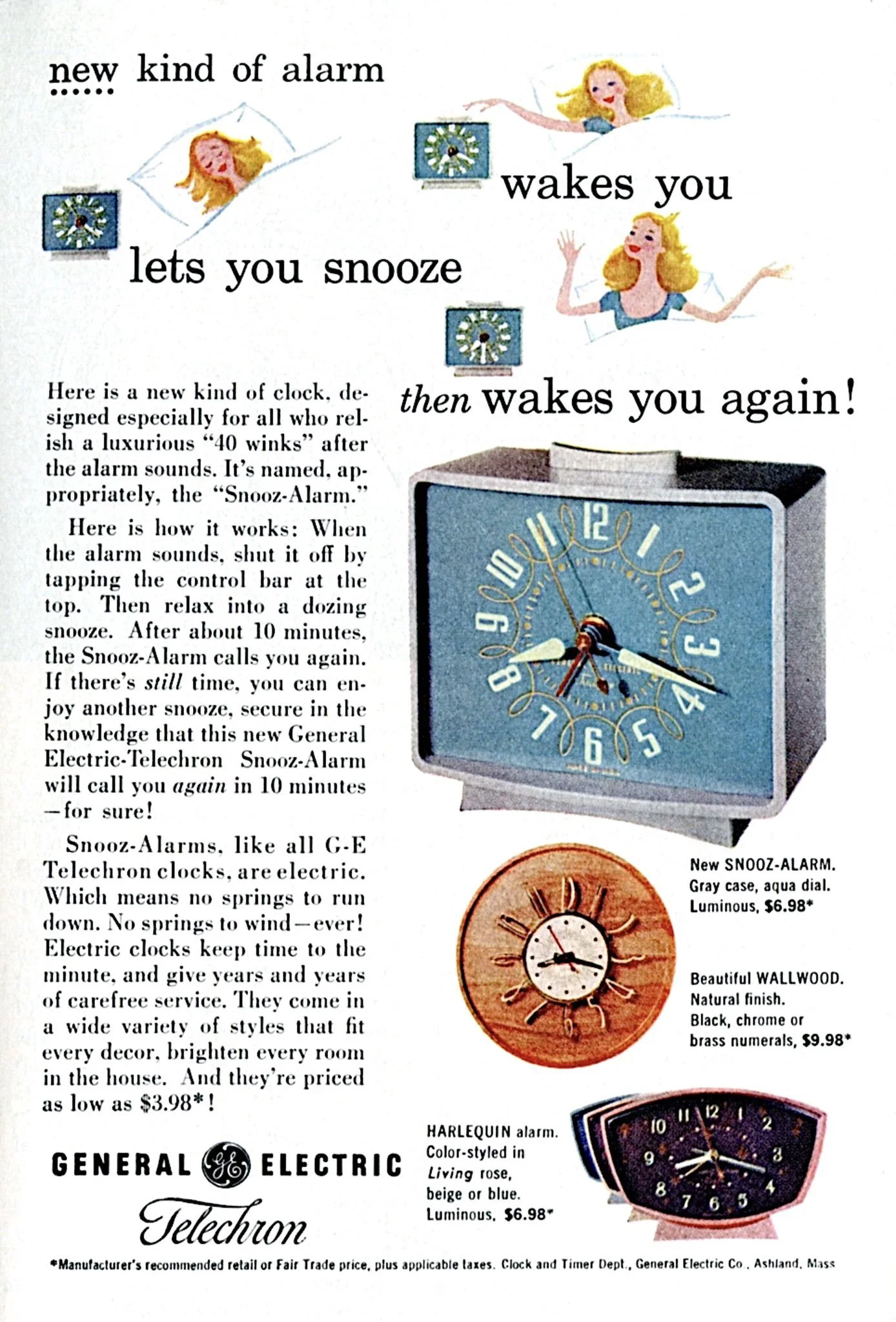
By the way, if you’ve ever wondered why snooze is nine minutes instead of a clean ten, there’s a reason.
The first alarm clock with a snooze feature was the 1956 "Snooz-Alarm" by General Electric-Telechron. At that time, clocks used mechanical gears that made it difficult to set a snooze function longer than nine minutes without disrupting the timekeeping mechanism. Engineers chose nine minutes because it was the closest they could get to “about ten minutes” without the gears slipping.
And then, because habits spread faster than logic, digital clocks inherited the same number.
So now we all live with this oddly specific little window of time baked into our mornings.
You didn’t choose nine minutes.
Your clock did.
Which makes turning it into something useful feel strangely satisfying - like realizing you can control the magic of an ancient relic that’s been ruining your morning for years.
The Lie: Big Change Requires Big Effort
By the time we reach adulthood, most of us have absorbed a quiet, persistent lie about self-improvement:
If it doesn’t feel dramatic, it can’t be that effective.
We imagine that a better life comes from sweeping transformation - the 5 a.m. intense workout plan; the cutting carbs, sugar, caffeine and everything-else-worth-living-for diet plan; the brand-new identity we step into overnight plan.
But the reality is far simpler and far less glamorous:
Big goals are built through small, consistent bursts of effort.
Not one big heroic swing.
Not a January 1st transformation.
Not a rigid daily routine that dies by Wednesday.
Small steps. Daily steps. Completely unremarkable steps.
The Twist: The Snooze Button Is Already a Habit System
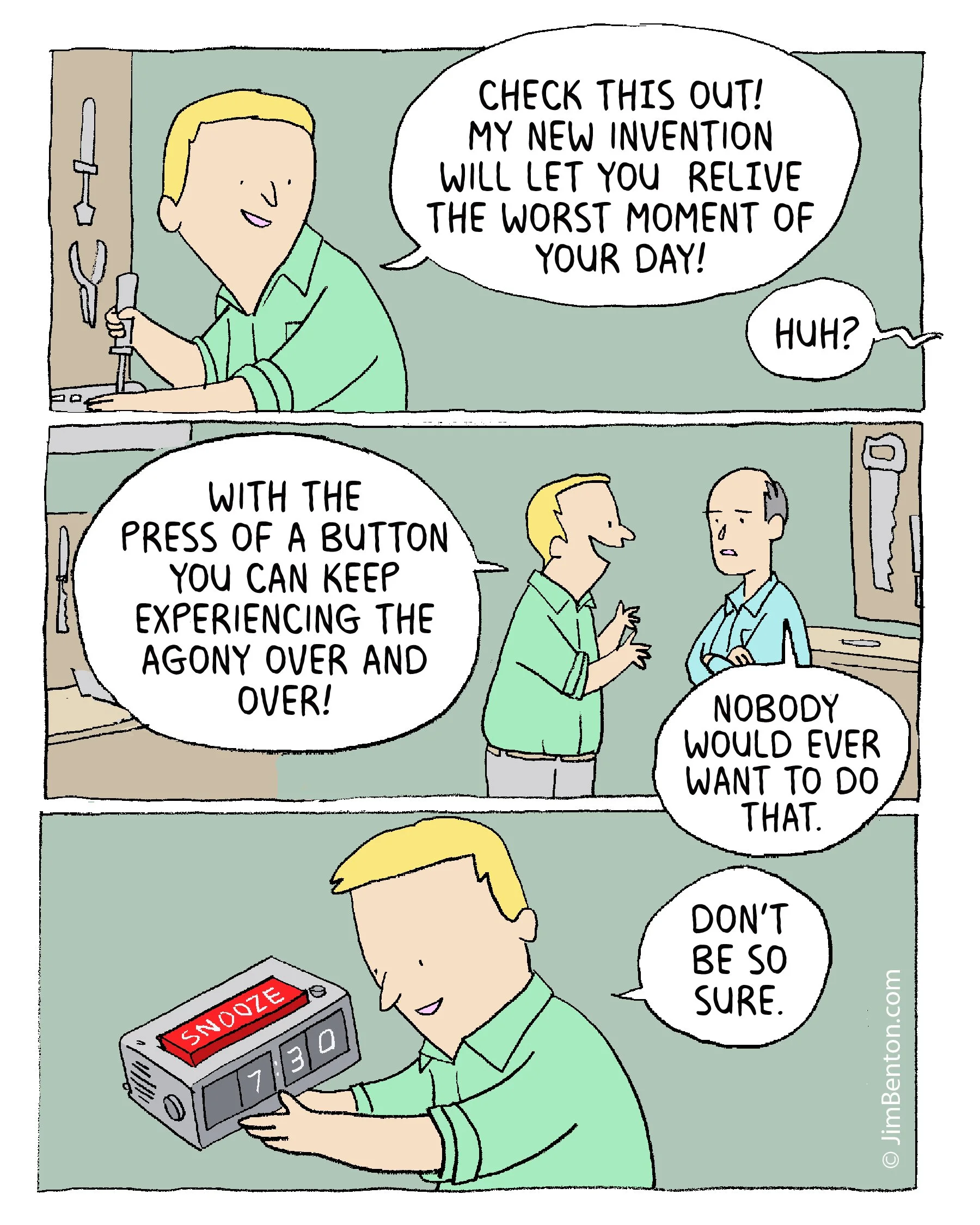
We all know the snooze button as that little morning temptation that buys us a few more minutes of unconsciousness. But very few of us ever stop to think about how useful it could be if we flipped its purpose completely.
The snooze button is:
universal
mechanical
predictable
fixed at nine minutes
and anchored to the exact moment your day begins
It is a pre-programmed micro-routine system we’ve all been ignoring.
Or, worse - using it against ourselves.
The hack is simple:
Use the snooze button not to delay your day, but to give it a jumpstart with tiny, productive and rewarding intervals.
The Hack: How Snoozehacking Actually Works
This is the part where I want to be painfully specific, because this isn’t a concept - it’s a practice. I’m not perfect at it, just to be clear. I’m not some guru claiming to do this every morning of my life without fail. But when I am consistent, it’s unbelievably effective.
Here’s the system.
1. Set your alarm with intention.
If you typically roll out of bed by 7am after hitting snooze several times - rushing around, barely getting everybody out the door in time, Pop-Tart in hand - then set your alarm for an hour earlier. Give yourself that full hour for healthy habits instead.
So, set your alarm for 6am.
But unlike your old routine - where you may have set it for 6 or 6:30am and then snoozed your way to 7 - this time the snooze button has a new job.
Normally roll out of bed at 9am? Set it for 8. Feet hit the floor by 6am every morning? Set it for 5. You get the idea.
2. The first snooze is now your wake-up ritual.
When your alarm goes off, you get up. Period. Hit the snooze like you normally do, but treat it like the first shot clock in the exciting possession of a brand new day.
The clock is ticking and that first nine minutes is all about convincing your body that the day has truly begun:
drink 8–12 ounces of water
turn on the light
brush your teeth
go to the bathroom
splash water on your face
stretch lightly
open the blinds, let in the light
move your body in whatever simple ways help you wake up
start the coffee/teapot
3. Every snooze after that is a mini-session.
This is where the magic happens. Each time the alarm goes off, it's a signal to move onto the next healthy habit. Choose from any of these or make up your own:
9 minutes of reading
9 minutes of stretching
9 minutes of journaling
9 minutes of bodyweight exercise
9 minutes of prayer or meditation
9 minutes of creativity
9 minutes of cleaning one small area
9 minutes of planning your day
You don’t need a half hour for any of those things.
You don't even need ten minutes.
Nine’ll do just fine.
Nine minutes of reading? I know it doesn't sound like a lot. But, if you do it every single morning (and/or in the evening, too), you can actually knock out quite a bit of reading. Workouts? Same thing. You can do a lot of simple bodyweight workouts in nine minutes - sit-ups, push-ups, toe touches and stretching. Nine minutes of stretching or light bodyweight workout is really, really good for you, especially if you do it every single morning.
4. Make it work for you.
You can only spare thirty minutes in the morning? Fine. That’s still three meaningful intervals - more than most people accomplish before they’re out the door.
If you’re in the middle of a chapter when the alarm goes off? Finish it. Borrow a couple minutes from the next interval.
If you want two intervals (18 minutes) of exercise or reading? Do it. Make it work for you.
The whole point is to use the rhythm of the snooze for momentum - not false starts.
5. Cut yourself some slack, too.
Look, I have kids. I live in a household that wakes up all at once. I understand the craziness that comes with getting a house full of people ready to go to school and work.
And as I’ve mentioned before, I battle with bipolar disorder - not every morning is “standard issue.”
Some mornings are big wins. Others are survival.
Maybe your mornings look nothing like mine. Maybe your body or your schedule makes routines unpredictable.
That’s okay.
The hack doesn’t break when life gets messy. It’s so simple and so available that you can restart anytime and celebrate a small win or two without feeling like you have to completely transform yourself.
What the Snooze Button Actually Teaches You
When you stop using the snooze to procrastinate and start using it to progress, you learn something very surprising:
Your brain prefers small, consistent effort over big intimidating effort.
It always has.
The snooze button, of all things, becomes the reminder that you don’t need massive energy or perfect discipline to move your life forward. You just need to take one step at a time.
Over a week, that’s a lot more reading.
More exercise.
More peace.
More intention.
More progress.
All from a button you used to push to put off the simple act of getting out of bed in the morning.
Ready?
What I hope you feel right now is:
“You’re right. I kind of already knew that small steps matter. But I never thought of using the snooze button this way. This gives me a real tool - one I can actually try tomorrow morning and stick with all week.”
That’s snoozehacking.
It’s not a gimmick. It’s not hustle culture performance.
It’s just small steps toward a healthier, happier life - nine minutes at a time.
And if you’re curious how this plays out in my own life, I’ll share my actual morning and evening snoozehacking routines in a follow-up post. I rarely execute them perfectly, but half the battle is already won when I know the structure is prepared ahead of time and the snooze button is always within reach.
Next Steps:
🧠 Think about it - When you think of the things you put off for lack of time, what comes to mind? Which of those things could be tackled in a 9-minute burst during your morning or evening Snoozehacking routine?
💬 Talk about it - Planning on trying Snoozehacking? Let me know! Leave a comment here or reply to one of my emails. I’d love to know how it goes for you!
👉 Want more weekly reflections like this? Sign up for the email list to get each new Juxtapost in your inbox.